What Employers Need: Why Human Capabilities Belong at the Center of Education
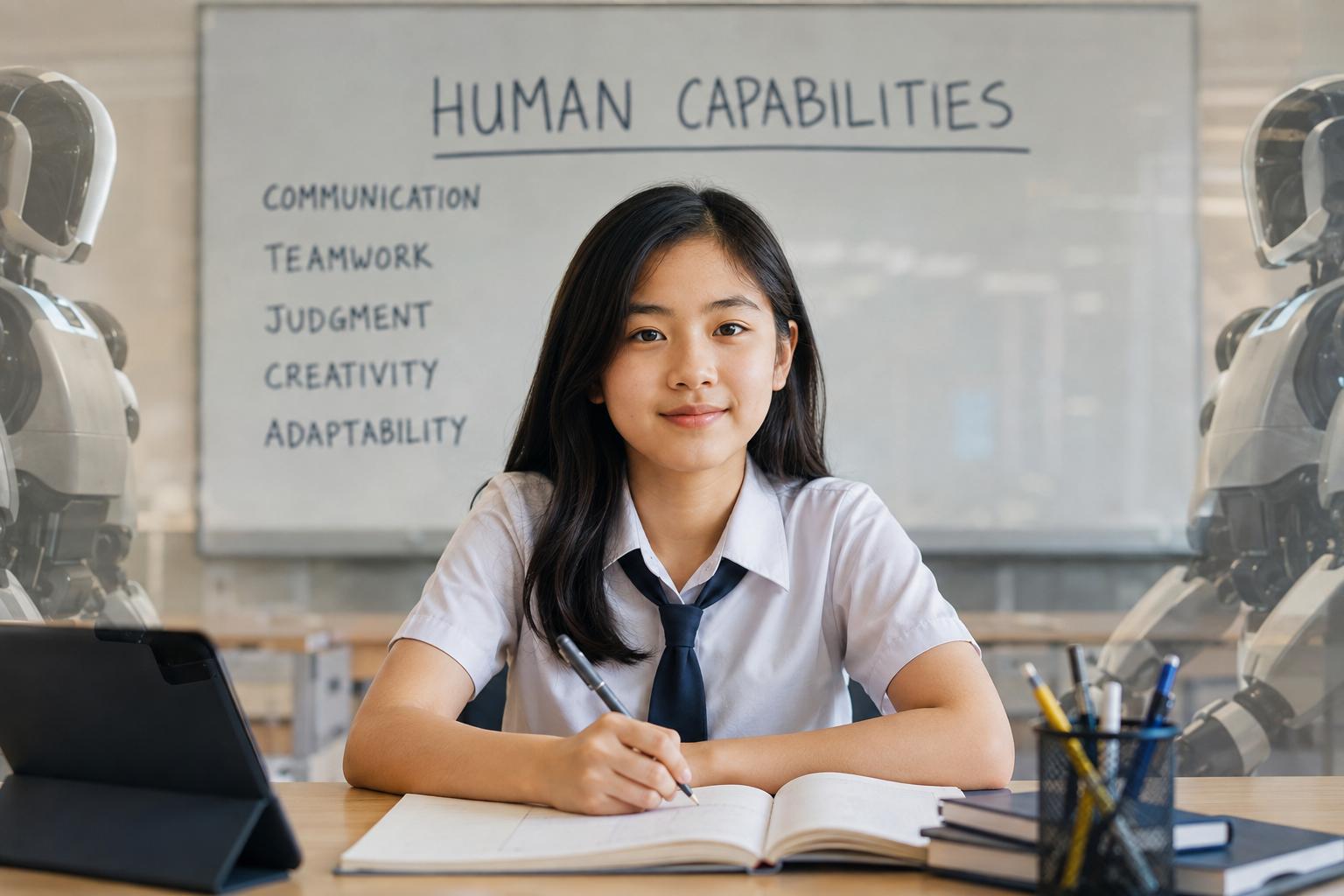
As technology and artificial intelligence transform technical work, employers increasingly need people who can think critically, communicate clearly, collaborate effectively, adapt confidently, and exercise sound judgment. Education can respond by making the development of these human capabilities more intentional, experiential, and connected to real life.
The question is no longer whether technology will change work. It is whether people—and the institutions that prepare them—can change with it. Artificial intelligence can now draft, translate, summarize, analyze data, generate software, and support decisions at extraordinary speed. As machines perform more routine cognitive work, however, human contribution does not become irrelevant. It moves toward the work that requires context, judgment, initiative, ethical responsibility, creativity, and cooperation.
Employers need technical skills and human capabilities
Imagine two candidates for a role in a rapidly changing organization. The first has excellent technical credentials and can use today’s tools efficiently, but waits to be told what to do. The second is technically competent, asks perceptive questions, works well across cultures, learns unfamiliar systems, and helps colleagues turn an uncertain problem into coordinated action. Which person is better prepared for a dynamic work environment that requires adaptability?
The answer is not that technical knowledge has lost value. It is that technical proficiency and human capability multiply one another. Employers need people who can use relevant tools and knowledge, then apply them through communication, critical thinking, teamwork, adaptability, self-management, leadership, creativity, and sound judgment. These qualities are sometimes called “soft skills,” but the label can make them sound optional. They are better understood as human capabilities: capacities that convert what a person knows into responsible and effective action.
Current employer evidence reinforces this need for a balance of human and technical skills.
The World Economic Forum’s Future of Jobs Report 2025 drew on more than 1,000 companies representing over 14 million workers across 55 economies. Employers expected nearly 40 percent of the skills required on the job to change by 2030, and 63 percent identified skills gaps as a principal barrier to transformation. Technological skills in AI, big data, and cybersecurity are growing quickly, yet analytical thinking remains the leading core skill: seven in ten surveyed employers described it as essential. Resilience, flexibility, agility, leadership, creative thinking, motivation, and self-awareness also ranked near the top. [1]
NEARLY 40%
of job skills are expected to change by 2030
World Economic Forum, Future of Jobs Report 2025 [1]
The National Association of Colleges and Employers reached a similar conclusion in its 2026 survey of entry-level hiring. Employers looked especially for evidence that candidates could work in teams, solve problems, and communicate effectively. Employers considered communication, teamwork, professionalism, and critical thinking especially important, while also seeing room for improvement in graduates’ communication, professionalism, and critical thinking. [2][3]
The pattern is not “human skills instead of technology.” It is technological fluency together with human capability. A person using AI still has to define the problem, judge the reliability of an answer, notice what the system has missed, understand the people affected, explain a decision, and accept responsibility for the outcome. To help educators integrate AI learning objectives into school curricula, UNESCO’s AI Competency Framework for Students combines a human-centered mindset and AI ethics with technical knowledge, application skills, and system design. [4]
Figure 1. SPS interpretation of UNESCO’s AI Competency Framework for Students (2024), CC BY-SA 3.0 IGO.
Is education failing? That is the wrong question
Schools are not factories, and employability is not their only purpose. Education also develops knowledge, citizenship, culture, curiosity, well-being, and the capacity to lead a meaningful life. Nor is every school trapped in an outdated model. Around the world, thoughtful educators are using inquiry, projects, service, performance, interdisciplinary learning, and reflection to help students apply what they know.
The more useful question is this: how can we more effectively integrate human capability development across curricula to help students flourish?
Knowledge remains essential, but knowing is not the same as being able to act. A student may explain teamwork on an examination without being able to listen under pressure, resolve disagreement, include a quiet colleague, or adjust a plan when conditions change. A student may define ethical leadership without having practised making a difficult decision whose consequences affect other people. A student may produce a polished individual assignment while remaining unable to build shared understanding with a diverse team.
Assessment inevitably directs attention. If schools assess mainly individual recall and technically correct answers, students become skilled at producing those answers. The capabilities employers and communities need are more difficult to measure because they appear in action, over time, and in context. That difficulty is not a reason to ignore them. It is a reason to design better opportunities to practise, observe, reflect on, and demonstrate them.
The OECD’s Future of Education and Skills work describes the competencies students need as an integration of knowledge, skills, attitudes, and values, supported by student agency and directed toward individual and collective well-being. Its 2025 Skills Outlook similarly argues that literacy, numeracy, and adaptive problem-solving must be complemented by social and emotional capacities that help people collaborate, innovate, and respond to change. These capacities are not fixed traits; they can be cultivated. [5][6]
A practical shift: from exposure to capability
The answer is not to discard academic subjects, teachers, schools, or examinations. It is to make human development more explicit within and alongside them. The shift is from assuming that capability will emerge automatically to designing for it intentionally.
Name the capability. Students should know whether an experience is designed to strengthen communication, situational awareness, critical thinking, teamwork, adaptability, leadership, or another capacity—and what effective performance looks like.
Create a meaningful experience. Capabilities develop through decisions and consequences: a team challenge, investigation, simulation, service project, presentation, expedition, performance, or authentic problem supplied by the community or an employer.
Build purposeful interdependence. Group work is not automatically teamwork. Tasks should require participants to exchange information, coordinate roles, manage resources, handle disagreement, and succeed together rather than merely divide a project into isolated pieces.
Reflect before rushing onward. Experience alone can reinforce poor habits. Structured debriefing helps learners examine what happened, distinguish intention from impact, connect action with results, and decide what to adjust. Evidence on metacognition likewise emphasizes planning, monitoring, and evaluating one’s learning. [7]
Repeat in varied contexts. A communication technique demonstrated once is knowledge. Used effectively with different people, under different pressures, and with decreasing support, it becomes skill and then capability.
Assess evidence, not labels. Instead of awarding marks for claiming to be collaborative or resilient, gather observations, peer feedback, reflection, products, decisions, and examples of improvement. Employers, too, increasingly want candidates to demonstrate skills rather than simply list them. [2]
Use AI to extend human agency. Students should learn to work with AI while checking sources, recognising bias, protecting privacy, explaining their reasoning, and retaining responsibility for decisions. The educational question is not merely whether they can produce an answer, but whether they can judge and use it wisely.
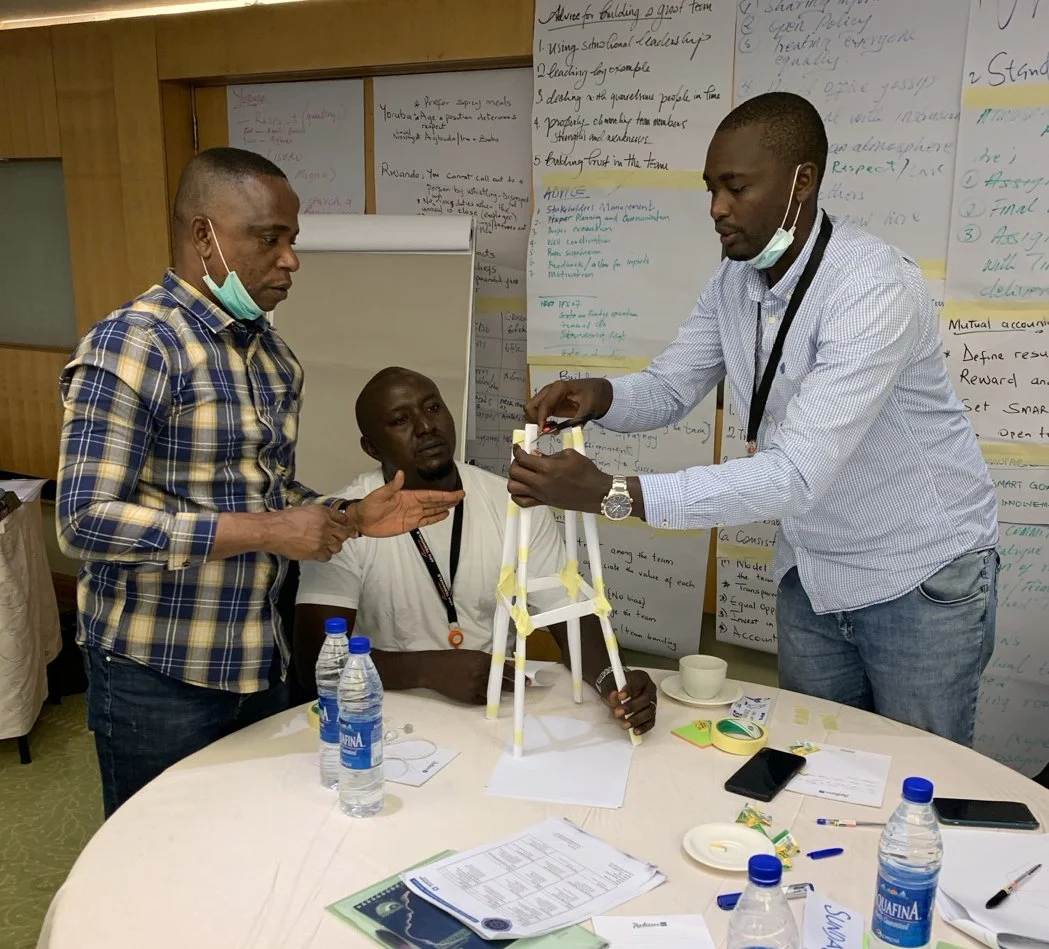
Experiential learning makes teamwork, communication, judgment, and adaptability visible in action. Photograph: Soft Power Skills archive.
Technology can support this work, but it cannot substitute for the work itself. Watching a video about leadership is not leading. Reading about communication is not navigating a difficult conversation. Asking an AI system to produce a reflection is not examining one’s own assumptions. Human capabilities are formed through participation, feedback, responsibility, and repeated practice.
Motivation matters
Intentional capability development also changes the learner’s relationship with education. Self-determination theory identifies three basic psychological needs that support high-quality motivation: autonomy, competence, and relatedness. Autonomy does not mean the absence of standards; it means experiencing self-determination and ownership. Competence grows through appropriately challenging work and useful feedback. Relatedness grows through connecting to others and to a meaningful purpose, and feeling significant within a group. When learning environments support these needs, students are more likely to engage, persist, and take responsibility for improvement. [8]
This is why an effective experiential-learning cycle is more than activity. Learners experience a challenge, reflect on what occurred, understand the principles revealed, adjust their approach, and act again. Over repeated cycles, knowledge and isolated skills can develop into capability, character, and positive impact.
The purpose is not to turn schools into narrow employment-training centers. It is to prepare young people to flourish in a world where they will need to keep learning, work with people unlike themselves, use powerful technologies responsibly, and act when the correct path is not written in a textbook. Those are employer needs, but they are also human and civic needs. Put them at the centre of education, and students will be better prepared not only to obtain work, but to improve the workplaces and communities they enter.
by Robert L. Cummings Jr.; substantially revised and updated in 2026.
Sources
[1] World Economic Forum. The Future of Jobs Report 2025. View source
[2] National Association of Colleges and Employers. “The High-Impact Skills College Students Should Showcase on Their Resumes.” 23 April 2026. View source
[3] National Association of Colleges and Employers. “Employers Say New Grads Are Largely Prepared for Work, With Room to Improve.” 20 April 2026. View source
[4] UNESCO. AI Competency Framework for Students. 2024. View source
[5] OECD. Future of Education and Skills 2030/2040. View source
[6] OECD. OECD Skills Outlook 2025: Widening Opportunities by Investing in 21st-Century Skills. 2025. View source
[7] Education Endowment Foundation. Metacognition and Self-Regulation. View source
[8] Ryan, R. M., and Deci, E. L. “Intrinsic and Extrinsic Motivation from a Self-Determination Theory Perspective.” Contemporary Educational Psychology 61 (2020): 101860. View source